Historical Times
 |
Who invented the wheel and from what?
|
| Some historians place the invention of the wheel in Poland, thanks to the Bronocice Pot, the first ceramic and the first drawing of a wagon, carbon-dated to 3500 BC. | 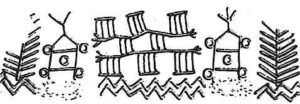 |
|
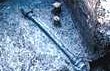
The oldest wheel, dated to 3100 BC, was found in a marsh near Lubjiana (photo opposite). The oldest carts found come from the Cucuteni-Tripolye culture (Ukraine, Romania) (-3000). But the determination of the "first" label is largely distorted by the vagaries of storage conditions (soil acidity, ease of looting), which play as important a role as creativity! |
  |
| The Ur stall depicts chariots and the Sumer Wheel in 2600 BC. |  |
| The wheel and chariot evolved around 2000 BC, notably in the Andronovo culture, but also in India, China and Norway, when separate spokes were introduced, bronze metallurgy was used for bearings and the horse was used for propulsion. | 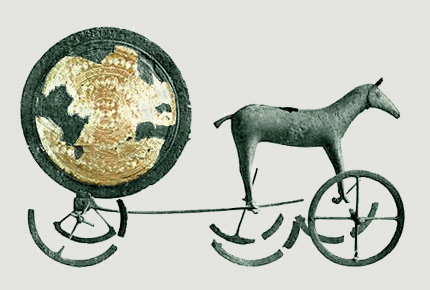 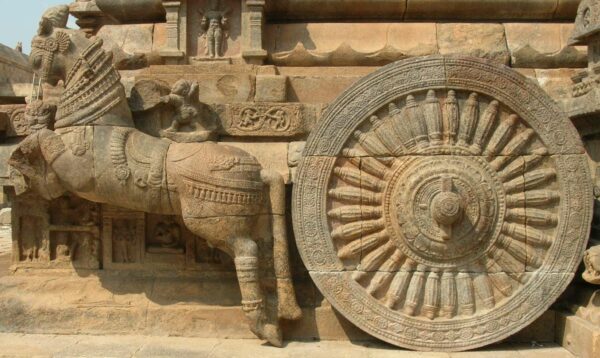 |
| Chariots then played a key role in warfare, for example in the battle of Quadesh in 1271, where the 5,500 chariots of Ramses II were pitted against the Hittite coalition. | 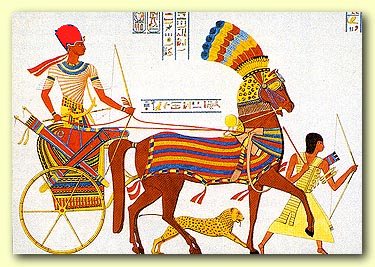 |
|
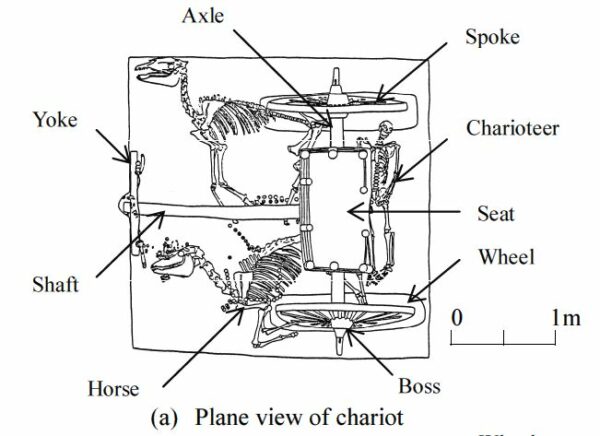
In Asia, chariots from the Yin dynasty (-1600 to -1046) have been found, characterized by large wheels with numerous spokes and pronounced camber. The discovery of the steel foundry in 500 BC led to the development of more efficient bearings. |
 |
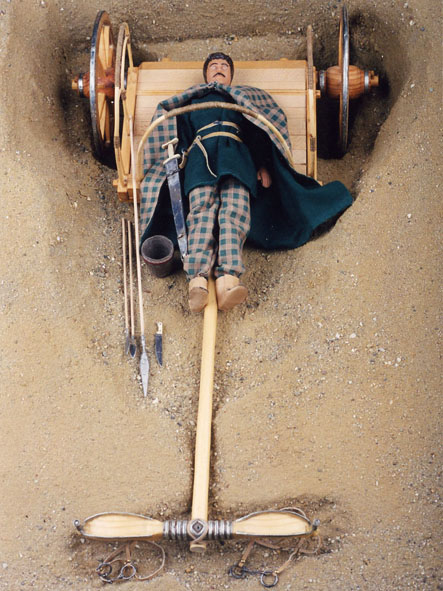 |
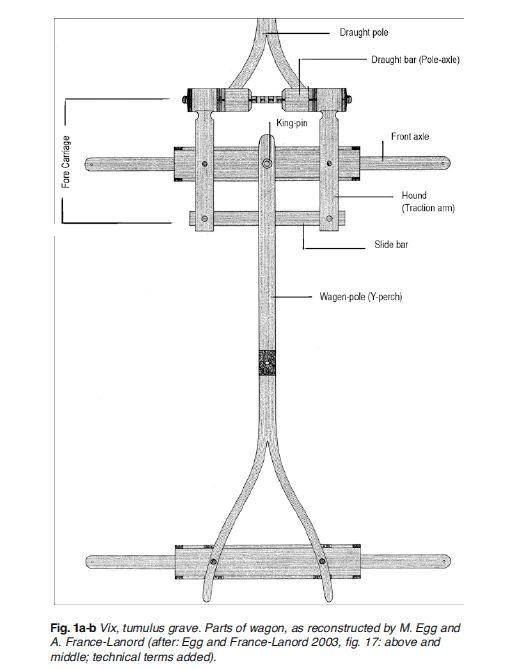
The one-piece steel rim and fixed axle appeared around -1000 AD in the Celtic civilization of Hallstatt, the first Iron Age. Around 500 BC, the Gauls and other Celts had the custom (e.g. 150 tombs in Champagne) of burying their chieftains on their war chariots, usually with 2 wheels, sometimes with 4 wheels and steering and suspension, as at the Tombe de Vix, which contains the remains of a queen-priestess wearing a pure gold diadem. The French word char and the English words car, cart and chariot come via the Latin carrum, from the Gallic karros. The Latin historian Tacitus in Annals XIV, 35 of 110 AD and Julius Caesar in The Gallic War describe the more comfortable Celtic suspension chariot. You can reconstruct the Wetwang (Yorkshire) wagon thanks to the BBC. |
|
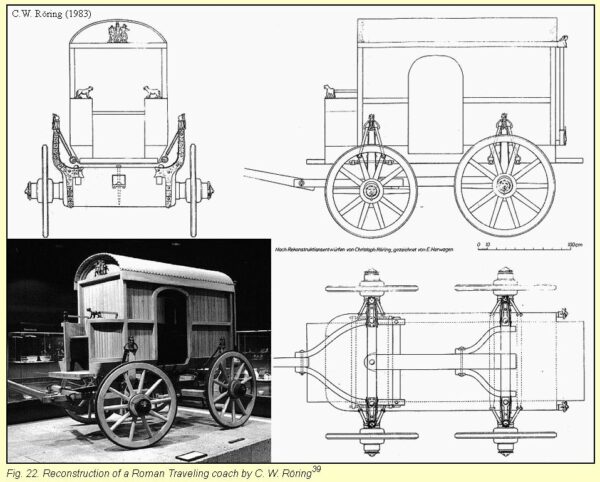
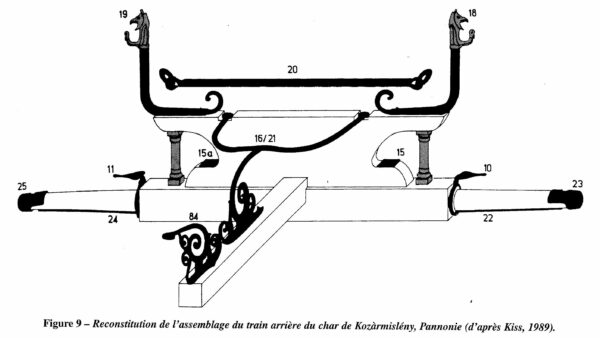
The Romans adopted this invention and, from the 1st century onwards, used it extensively throughout the empire, from the Dejbjerg tank in Norway, preserved by the peat bogs, to those in Hispania, Thrace and Pannonia. Opposite, Roering's reconstruction of the Roman 4-wheel chariot, which (contrary to the long-held view to the contrary) features steering, suspension and brakes. Suspension is provided on each axle by the extension of a double transverse loop of leather straps passing under the body and suspended from artistically shaped bronze loops located at the upper extension of the axles. Emperor Claudius (41-54) used his suspended chariot to play checkers, while Emperor Adrian (117-138) used it to play dice! Suetonius speaks of Nero (37-68): Never, it is said, did he travel with less than a thousand carriages! We understand where the words Suspension, suspension, sospenzione, suspensión, RadAufängung come from. The Romans also focused on roads, the Via Egnatia. Suspension and steering were forgotten during the Middle Ages. |
|
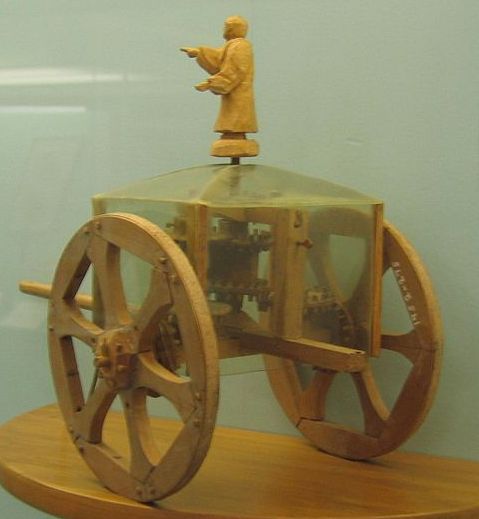 |
The straight line is the shortest route from one point to another. So as not to get lost in the great Chinese Empire before the invention of the magnetic compass, the carriage always pointing south was built in 237 by mechanical engineer Ma Jun for the Ming king of Wei (also known as Yuanzhong and Cao Rui). The English wiki is much more complete. This carriage features a complete device with differential gears and angular gearboxes, which transforms the difference in rotation speeds of the right and left wheels during a bend into the rotation speed of the turret's yaw angle, enabling the Emperor's statue to always point its finger in a constant direction - south! My Jun carried out this work to arbitrate the controversy over the reality of the legends of such a chariot, dated -1115 and -2634 years ago. So this device was at least dreamed up on both dates! In passing, Ma Jun masterfully defined the demonstrator's approach with this sentence: "Empty arguments with words can in no way compare with a real trial that will show practical results". This invention would be forgotten again and reconstituted at least twice, in the 6th and 11th centuries. Technical history sometimes stutters. The dispute over the paternity of the differential in the 17th century is a laughable one. |
|
In the West, mechanisms were developed in Greece, for example the Antikythera mechanism (dated -100) is an astronomical clock providing the positions of the sun and moon. It comprises 37 bronze gears, including a differential system for subtracting the angular velocity of the moon from that of the sun, and thus predicting eclipses. Based on the work of Archimedes, this level of science and technology remained unrivalled until the Renaissance. |
|
|
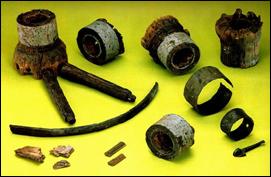
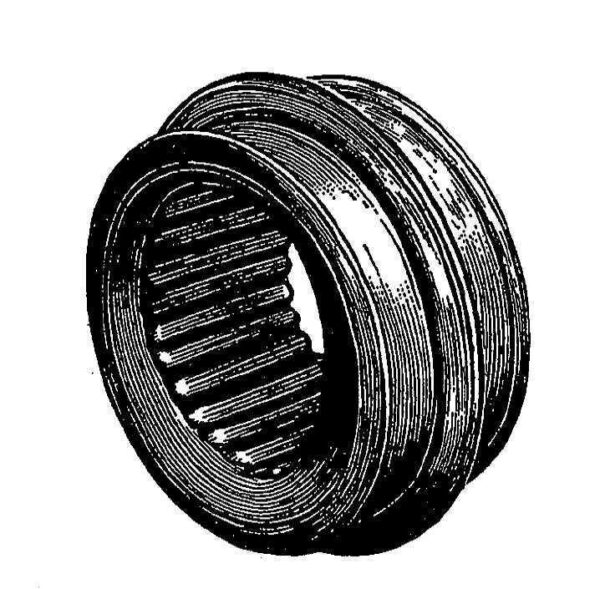
There is no invention without technology; one of the key components of all mechanisms, the ball bearing has made it possible to reduce passive efforts, exceed the load and speed of a walking man and thus "improve nature". Ball bearings were invented by the Celts: hardwood rollers between the axle and hub of their chariot wheels. |
  |
|
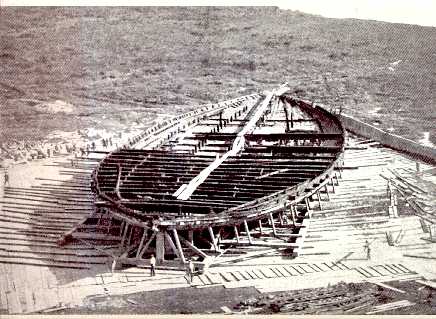
In 1928, while emptying Lake Nemi near Rome, two enormous boats belonging to the emperor Caligula (-40) were found, even though they are not mentioned in any written documents! Look at the size of the men in the photo of the discovery: the boats measure over 70m! They featured bearings made from wooden, bronze and copper parts. Far superior to the 30 m of the longships and the 25 m of the Santa Maria, it was not until the great fleet of Admiral Zheng He (1405) that this size was surpassed. |
 |
| The Middle Ages were a less fruitful period in Christian Europe, but the transmission of knowledge of Greco-Roman science and technology and creative activity were carried out by Al-Andalus. | 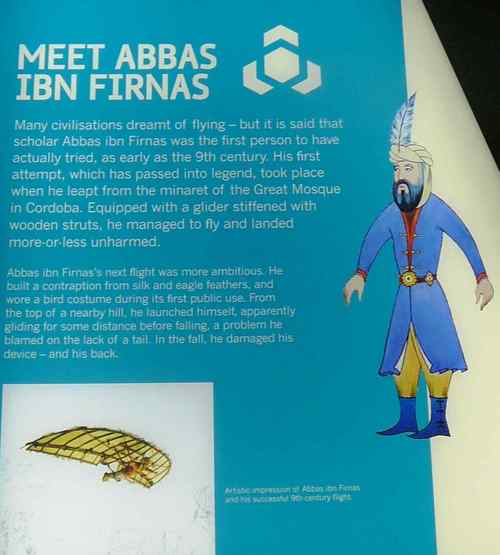 |